

Last updated on 23rd April 2026
When it comes to building a website, one of the first questions people ask is: “How much is this going to cost me?” And the honest answer is — it depends.
Think of it like buying a kitchen. Are you after something clean and functional from IKEA, or a fully bespoke design handcrafted to your exact spec? Websites work the same way. Prices vary based on who builds it, what it needs to do, and how much customisation you want.
This guide breaks down every cost you’re likely to encounter — from design and hosting through to SEO and ongoing maintenance — so you know exactly what you’re paying for, and why.
1. Website Design and Build
This is the biggest variable in any website project. The price you pay depends on three things: who builds it, what it needs to do, and how bespoke the design is.
DIY website builders (Wix, Squarespace, Shopify):
If budget is the primary concern, platforms like these let you build a site yourself for as little as £10–£30 per month. They’re fine for very early-stage businesses or simple online presences, but they come with limitations — less flexibility, weaker SEO foundations, and a look that can feel templated.
Freelance designer or small studio:
A good middle ground for most small businesses. You get a professionally designed, custom-built site without agency-level overheads. Studio Payne sits squarely in this space — if you’d like to see what that looks like in practice, check out our web design services.
Website design agency:
Typically higher cost, but brings a full team — strategy, design, development, copywriting — under one roof. Better suited to larger projects or businesses with complex requirements.
Not sure which route is right for you? We’ve covered the pros and cons in more detail in our guide to hiring a freelancer vs design agency.
Typical website design price ranges:
- Standard website: £800 to £4,000. Covers simple multi-page sites with a clean, professional finish. At the higher end, you can achieve polished design with added functionality through plugins and integrations.
- Simple eCommerce: £1,200 to £6,000. Includes product listings, payment gateways, and a user-friendly layout built to drive sales.
- High-end or bespoke: £5,000 to £30,000+. Custom design, complex functionality, unique integrations, and a tailored user experience.
What affects the price within these ranges?
Largely it comes down to the number of pages, the complexity of the design, any custom functionality required, and the experience level of whoever is building it.
2. Domain Name
Your domain name is your address on the internet — think of it as buying the plot of land before you build. It’s a small but essential cost.
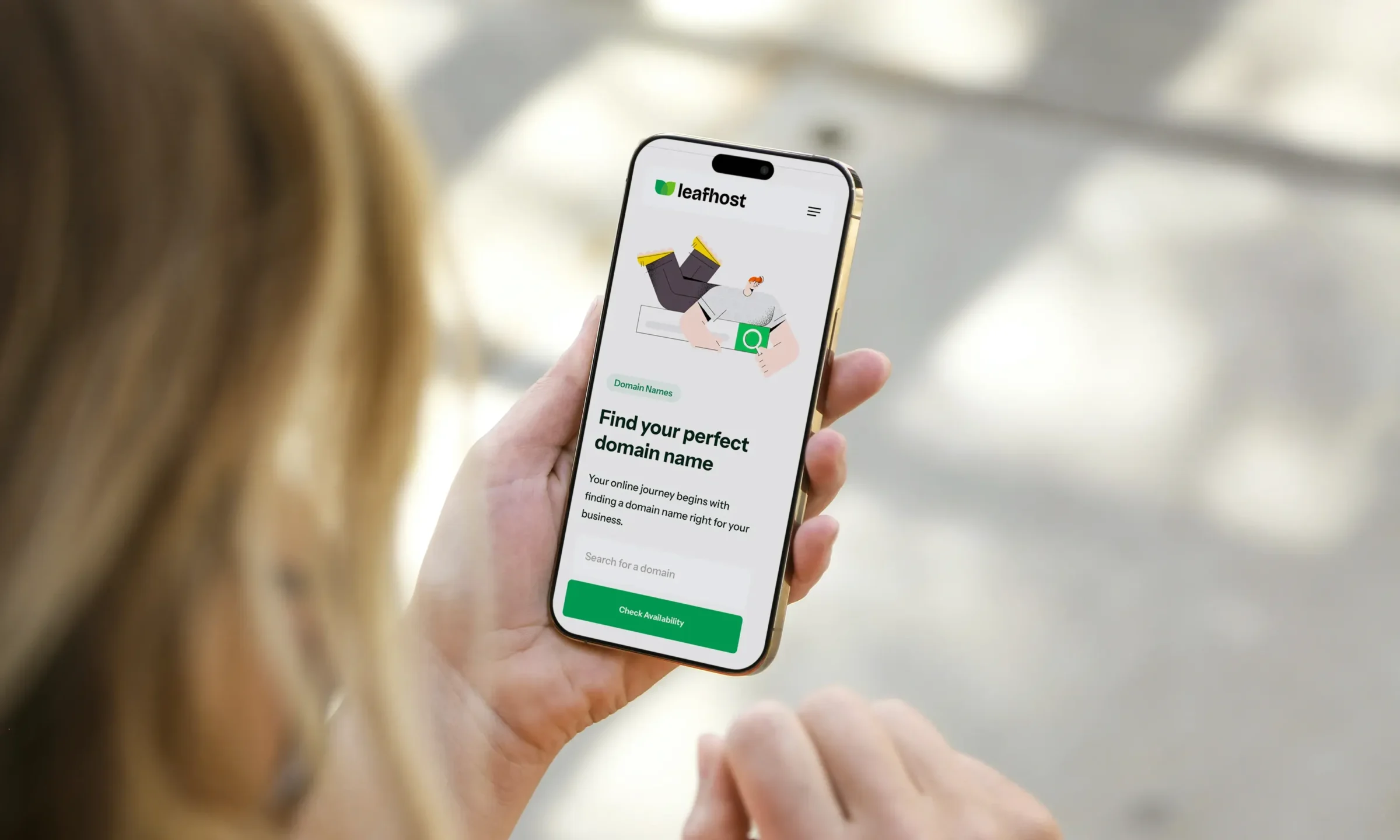
A standard domain will typically cost between £10 and £30 per year. Premium or highly sought-after domains can command significantly more, but for most small businesses a straightforward .co.uk or .com is all you need.
On the extension question: .co.uk tends to work well for businesses targeting a UK audience, while .com has broader international recognition. Newer extensions like .studio, .agency, or .shop are worth considering if your preferred .co.uk or .com is taken.
You can register a domain yourself through providers like GoDaddy, 123 Reg, or LeafHost — or if you’d prefer not to deal with the technicalities, we can handle it on your behalf as part of your project.
3. Website Hosting
Hosting is where your website lives on the internet — the server that keeps it online and delivers it to visitors. Like renting a physical premises, you get what you pay for.
Types of hosting:
- Shared hosting: Your site shares a server with many others. Cheapest option (from £5/month) but can be slow and less secure — fine for personal projects, not ideal for business.
- Managed hosting: A step up in performance, security, and support. The provider handles technical maintenance so you don’t have to. This is what most small businesses should be on.
- VPS (Virtual Private Server): More power and flexibility, suited to larger or higher-traffic sites.
Typical costs:
- Entry-level shared hosting: £5–£10 per month
- Managed business hosting: £15–£75 per month
For most small businesses, managed hosting is the sweet spot — faster load times, regular backups, security monitoring, and someone to call if something goes wrong.
We offer managed WordPress hosting as part of our web projects, or as a standalone service — including backups, security monitoring, and support. Find out more about our hosting plans.
4. SEO (Search Engine Optimisation)
Building a website without SEO is a bit like opening a shop and not telling anyone where it is. SEO is what helps your site get found on Google — and it’s worth thinking about from day one, not as an afterthought.
There are a few layers to it:
On-page SEO: The foundations — page titles, headings, meta descriptions, keyword targeting, internal linking, and site structure. This should be built into any professional website from the start.
Local SEO: Essential for businesses serving a specific area. This includes optimising your Google Business Profile, building local citations, and targeting location-based search terms. If you want to appear when someone searches “web designer in Shrewsbury” or “plumber in Telford”, local SEO is how you get there.
Ongoing SEO: Search rankings aren’t set and forget. Ongoing work — content updates, link building, keyword tracking, competitor analysis — is what maintains and improves your position over time.
How much does SEO cost?
- Basic SEO setup: £300–£1,000, covering initial on-page optimisation as part of a new build
- Monthly SEO retainer: £200–£1,000 per month depending on competitiveness and scope
We offer local SEO packages for small businesses across Shropshire — from Google Business Profile management through to full monthly retainers.
5. Content Creation
A well-designed website with weak content will still underperform. Words, images, and video are what communicate your value to visitors — and to Google. It’s worth budgeting for content properly rather than treating it as an afterthought.
Types of content needed for a website:
Copywriting:
A professional copywriter will typically charge £150–£500 per page depending on length and complexity. Good copy isn’t just well-written — it’s structured for SEO and written to convert visitors into customers.
Photography:
Budget £300–£1,000 for a professional shoot. Authentic photography of your team, premises, or products almost always outperforms stock imagery for building trust.
Video:
Starts around £1,000 and scales with length and production quality. Even a short explainer video can significantly improve engagement.
Graphic design:
Bespoke graphics or illustrations typically run at £30–£80 per hour. At Studio Payne we charge £60 per hour — find out more about our graphic design services.
Stock libraries:
A cost-effective alternative when commissioned content isn’t feasible. Paid libraries like Adobe Stock or Shutterstock offer properly licensed commercial imagery — free options like Unsplash can work but check the licensing terms carefully before using images commercially.
AI content tools:
Increasingly used to support content production — useful for drafts and ideation, but best treated as a starting point rather than a finished product. Google rewards genuine expertise and original thought, so human editing and a real point of view still matter.
 Stock libraries, like Unsplash, can provide professional yet affordable content you can license for your website.
6. Maintenance and Updates
Websites aren’t a one-off purchase — they need ongoing attention to stay secure, fast, and relevant. This is one of the costs people most commonly underestimate when budgeting for a website.
A typical maintenance plan covers:
- Software and plugin updates: Especially important for WordPress sites, where outdated plugins are one of the most common causes of security vulnerabilities and site breakages
- Security monitoring: Regular scans and fixes to keep your site protected
- Backups: Automated backups so your site can be restored quickly if something goes wrong
- Performance checks: Monitoring load speeds and fixing issues that could affect user experience or search rankings
- Content updates: Minor amends, new pages, or seasonal changes
What happens if you skip web maintenance?
An unmaintained site is a security risk. Outdated software gets exploited, sites get hacked, and in worst cases you can lose the site entirely. It’s also a slow ranking killer — Google factors in page speed and security when deciding where to place you.
Typical website maintenance costs:
- Basic maintenance: £50–£200 per month
- More hands-on support with content updates and performance monitoring will sit toward the higher end
We offer maintenance and support plans for existing websites as well as sites we’ve built — so you’re never left managing the technical side alone. Find out more about our hosting and support plans.
So, what’s the bottom line?
Here’s a rough guide to total project costs, combining design, build, and first-year running costs:
- Basic small business website: £1,500–£4,000. A clean, professional site with standard hosting and minimal ongoing maintenance.
- Polished custom site with SEO support: £5,000–£10,000+. A well-designed, properly optimised site with ongoing SEO and maintenance built in.
- Fully bespoke, high-functioning site: £10,000–£30,000+. Custom design, complex functionality, and a full ongoing support package.
The right investment depends on what your business actually needs right now — and what it’s likely to need in the next two to three years. A website that costs more upfront but attracts consistent enquiries will almost always be better value than a cheap one that sits unnoticed.
If you’re not sure what your business needs or you’d like a straightforward, no-obligation quote, get in touch — we’re happy to talk it through.
Watch out for hidden costs
Even with a solid quote, there are costs that often catch people out. Worth knowing about before you sign anything:
- SSL certificate: The padlock in your browser that makes a site secure (https). Many hosts include this free, but not all — check before you commit.
- GDPR and cookie compliance: A cookie consent tool and a properly drafted privacy policy are legal requirements. Some developers include this, others don’t. Tools like Cookiebot or CookieYes typically cost £0–£100 per year depending on your site’s complexity.
- Premium plugins or themes: Some functionality relies on paid third-party tools — page builders, booking systems, membership plugins — which carry their own annual licence fees, typically £20–£200 per plugin.
- Stock imagery licences: Free stock sites are tempting but check the small print. Commercial use isn’t always permitted, and the wrong licence can cause problems down the line.
- Redesigns: Websites typically need a meaningful refresh every three to five years. It’s not a cost you’ll face immediately, but worth factoring into your longer-term thinking.
- Email hosting: A professional email address (you@yourbusiness.co.uk) isn’t always included in web hosting. Google Workspace starts at around £6 per user per month.
Website cost comparison at a glance
| DIY Builder | Freelancer / Small Studio | Agency | |
|---|---|---|---|
| Example platforms | Wix, Squarespace | Independent designer or studio | Full-service agency |
| Typical build cost | £0–£500 | £800–£15,000 | £5,000–£30,000+ |
| Monthly running costs | £10–£40 (platform fee) | £15–£75 (hosting) | £15–£75+ (hosting) |
| Design flexibility | Limited | High | High |
| SEO foundations | Basic | Strong | Strong |
| Ongoing support | Self-managed | Usually available | Usually included |
| Best for | Early-stage or hobby sites | SMEs and growing businesses | Large or complex projects |
Frequently asked questions
Is £1,000 enough to build a website?
It depends on what you need. At £1,000 you’re at the lower end of what a freelancer or small studio would charge for a professionally built site — you might get a simple one or two page site, or a more complete site with a limited scope. DIY builders like Squarespace or Wix are an alternative at this budget, though they come with limitations on flexibility and SEO. If your website is a key part of how you win business, it’s worth stretching the budget if you can.
How long does a website take to build?
A standard small business website typically takes four to eight weeks from kick-off to launch. This varies depending on how quickly content and feedback are provided — delays on the client side are the most common reason projects overrun. Larger or more complex sites can take three to six months.
Do I own my website once it’s built?
You should — but it’s worth confirming this upfront. A reputable freelancer or agency will transfer full ownership of the domain, hosting, and site files to you. Be cautious of arrangements where the developer retains ownership of the domain or locks you into their platform.
What’s the difference between a website redesign and a rebuild?
A redesign typically means refreshing the look and feel while keeping the underlying structure intact. A rebuild starts from scratch — new design, new code, sometimes a new platform. Rebuilds cost more but are sometimes the right call if your current site has technical debt or is built on an outdated platform.
Should I use WordPress?
For most small businesses, yes — WordPress powers around 40% of all websites globally and for good reason. It’s flexible, well-supported, and gives you full control over your content without needing a developer for day-to-day updates. It does require regular maintenance, but a good hosting and support plan takes care of that.
Can I build the site myself and hand it to a professional later?
Technically yes, but in practice it’s often more cost-effective to start right. DIY sites built on platforms like Wix can’t easily be migrated — you’d likely be starting from scratch anyway. If budget is tight now, a conversation with a freelancer about a phased approach is usually a better route than a DIY site you’ll outgrow quickly.